
The sample was perfect. You held it, you photographed it, you signed off on it. Then the production run arrived and it is thinner, or the color drifted, or the stitching is not the same, and your supplier is genuinely puzzled that you are upset.
Nobody lied to you. The golden sample and the production run were made by different people, on a different process, under a completely different amount of attention, and almost nothing in your paperwork forced them to match.
Closing that gap is mostly about three things: knowing which sample actually counts, writing an approval that can be enforced, and understanding what an inspection does and does not promise you.
This is for founders and brands ordering from an overseas factory. If you have not checked the supplier itself yet, start with how to verify a supplier before you pay, because a perfect sample from the wrong company is still the wrong company.
Why is the sample always better than the run?
Because it was made under conditions your order will never get.
A sample is usually made by hand or close to it, often by the most experienced person on the floor, using the best material in the building. Nobody is rushing. The owner may be standing there, because this sample decides whether a new customer places an order.
Your production run is the opposite. It is made at speed, by whoever is on shift, from a material lot that was bought later and at scale, with a deadline attached.
So the sample is not a prediction of your goods. It is a demonstration of the factory’s ceiling, and your run will land somewhere below it. The job is to control how far below.
The four samples, and which one actually counts
The word “sample” gets used for four different objects, and only one of them has any weight in a dispute.
A prototype proves the idea can exist. It is often made from the wrong material by the wrong method, and it tells you about form rather than about manufacturability.
A pre-production sample is made with the real tooling and the real material, before the line runs. This is the one that surfaces problems while they are still cheap, and skipping it is where most expensive surprises begin.
The golden sample is the approved reference. It is the physical object both sides agree the goods must match, it is documented and signed, and ideally two exist: one with you, one sealed at the factory.
A shipment sample is pulled from the finished run. It tells you what you actually bought, which is useful and far too late to change anything.
If you only do one of these properly, make it the golden sample, because it is the only one that gives you something to point at later.
What has to be on the approval for it to mean anything
An approved sample with no written specification is an opinion, not an agreement.
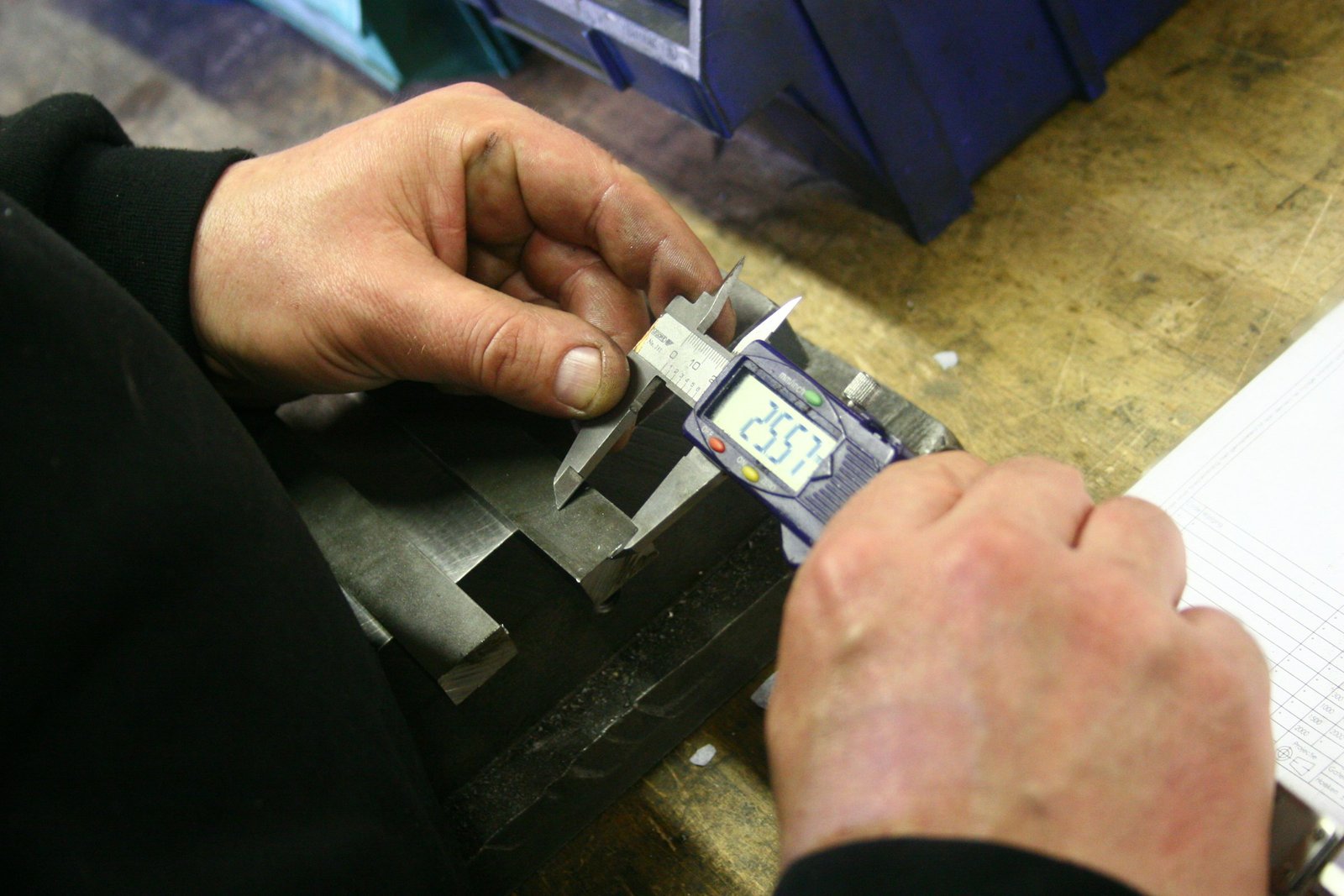
Dimensions have to carry tolerances. This is the item people skip most often and regret most. “120mm” is not a requirement, because no factory in the world hits 120mm every time. “120mm plus or minus 1mm” is a requirement, and it is the difference between a defect and a disagreement.
Then the rest of it. Material and grade, not just “stainless steel.” Finish and a color reference anyone can check. Weight, where weight matters. Labeling, marking, and the packaging the goods ship in, because packaging is where corners get cut quietly.
Add photographs of every face of the product, a signature and a date from both sides, and a line naming the factory that will run the bulk order. Keep your own retained sample somewhere you can find it in six months.
How AQL actually decides accept or reject
This is the most misunderstood part of quality control, and misunderstanding it leads founders to feel cheated by an inspection that worked exactly as designed.
An inspection does not check your whole order. It checks a statistically chosen sample, counts the defects, and compares that count against an accept or reject number. The framework for this is ISO 2859-1, sampling procedures for inspection by attributes indexed by acceptance quality limit.
The acceptance quality limit, or AQL, is the threshold used to decide whether the lot is accepted. It is not a target, and it is not a promise about the goods in your boxes. A lot that passes at a given AQL can still contain defects, and that is the design of the system rather than a failure of it.
In practice, defects get sorted by severity. Critical defects, the ones that make a product unsafe or unsellable, normally carry an AQL of zero. Major and minor defects carry progressively looser thresholds, because a scuff and a safety hazard should not be treated the same way.
The standard also adjusts over time. Inspection moves between normal, tightened, and reduced levels depending on how previous lots performed, so a factory with a good record earns lighter inspection and one that slips gets more scrutiny.
How the numbers are actually arrived at
It is worth knowing the mechanic, because it stops the report looking arbitrary.
Your lot size and the chosen inspection level produce a code letter. That letter, combined with the AQL you set for each severity class, gives the inspector a sample size and two numbers: the count of defects at which the lot is accepted, and the count at which it is rejected.
So three decisions shape every inspection result, and all three are yours rather than the inspector’s. How large the lot is, which inspection level you asked for, and what AQL you set per severity. An inspection booked without those decisions made is an inspection booked on somebody else’s defaults.
The lot failed. Now what?
A rejection is a negotiation, not an ending, and the time to agree the rules is before anyone inspects.
The usual options are that the factory sorts the entire lot at its own cost and resubmits, reworks the defective units, offers a discount for you to accept the goods as they are, or the lot is refused outright. Each has a different effect on your launch date, which is normally what you are really protecting.
Settle two things in the contract while everyone is still friendly. Who pays for re-inspection after a failed lot, and how many times a lot can be resubmitted before the order is cancelled. Without those lines, a failed inspection turns into a conversation where the side holding your goods sets the terms.
Check which edition your contract names
ISO 2859-1 was revised recently, and a lot of inspection clauses are now out of date.
Edition 3 was published on 22 January 2026 and replaces the 1999 edition, which has been withdrawn along with its amendment and corrigendum. The new edition also adds skip-lot sampling procedures.
If your inspection agreement or your supplier contract cites ISO 2859-1:1999, it is pointing at a withdrawn document. That is rarely fatal, and it is exactly the kind of detail that gets argued about when a rejected lot turns into a negotiation.
Stop asking for zero defects
It sounds rigorous and it is not a specification.
Zero defects is achievable only on a critical-defect line, and demanding it across the board tells a factory that your requirement is not serious. What works is the opposite: name the defects that matter for your product, classify them honestly, and set thresholds you will genuinely enforce.
The workshop that runs your order may not be the one that made the sample
This is the failure mode that surprises people most, because the factory you visited was real.
Capacity gets subcontracted. Your sample came off a good line, your order went to a smaller workshop down the road, and the first evidence is a batch that does not match. Nothing about this is unusual in a busy season.
Close it in writing. State that the bulk order will be produced at the named facility, that subcontracting requires your written approval, and that goods produced elsewhere can be rejected on that basis alone.
Then watch for it. Ask for dated photos or video of your product on the line rather than of the building. Compare the address on the packing list against the address on the business licence. An inspection booked at the named site that suddenly needs to happen somewhere else has answered your question.
When you do not need all of this
Sometimes the full process costs more than the risk it removes.
For a simple, low-value product on a small first run, a pre-production sample and a pre-shipment inspection are usually enough. Full tolerance drawings for a plastic tray nobody will measure are effort you could spend elsewhere.
The threshold moves with three things: how much money is in the order, whether a defect would be visible to your customer, and whether the product has any safety or regulatory exposure. Any one of those trending upward and the full process earns its keep.
Who should be doing this for you
Specifying an order properly is slow, unglamorous work that happens before anyone is excited about anything.
That is the practical difference between an operator and a middleman. A middleman forwards the sample and asks if you like it. An operator pins the specification down in as much detail as the product allows before anything is confirmed, keeps the retained sample, books the inspection against agreed thresholds, and is standing at the loading dock when the goods go out.
We have launched 18 brands and verified 800+ suppliers, with our own team on the ground in China for 15+ years. Our fee comes from you and we take zero commissions from suppliers, so there is nothing to gain from waving through a run that does not match what you approved.
What to keep from this
Four things, if you remember nothing else.
The sample shows a factory’s ceiling, not your order’s average, so expect the run to land below it and control how far. An approval without tolerances is an opinion, because a number with no tolerance cannot be enforced. AQL decides whether a lot is accepted and never promises your boxes are defect-free, so classify defects by severity instead of demanding zero. And put the producing facility in writing, because the workshop that made your sample is not always the one that runs your order.
Let us specify it properly before anything is made
We have launched 18 brands and verified 800+ suppliers. We write the specification with you, approve the sample against it, hold the retained reference, and inspect the run against thresholds everyone agreed to in advance.
Tell us what you are making, and we will tell you straight where your specification is currently leaving the decision to the factory.
Frequently asked questions
What is a golden sample?
It is the approved physical reference that both you and the factory agree the production goods must match. It should be documented alongside a written specification, signed and dated by both sides, and retained in two copies, one with you and one sealed at the factory. A golden sample without a written specification behind it, particularly dimensions with tolerances, is very hard to enforce when a run comes back wrong.
Why does production never match the approved sample?
Because the two are made differently. A sample is typically produced slowly, often by hand, by an experienced worker using the best material available, sometimes with the owner watching. A production run is made at speed, by whoever is on shift, from material bought later and in bulk, against a deadline. The sample shows what the factory can do at its best, so your job is to specify tolerances and inspect against them rather than to expect the run to equal the sample.
What does AQL mean on an inspection report?
AQL is the acceptance quality limit, the threshold used to decide whether a lot is accepted after a sample of it is inspected under ISO 2859-1. It is not a target and not a guarantee that your shipment is free of defects, since a passing lot can still contain some. Defects are usually classified by severity, with critical defects set at zero and major and minor defects allowed progressively more tolerance. Note that Edition 3 of ISO 2859-1 was published on 22 January 2026 and the 1999 edition is withdrawn, so check which one your contract names.