
Putting your own brand on a product is a different job from inventing one. You can have the brand, the audience, and the positioning figured out and still hit the same wall: a factory that makes the thing, holds the quality, and does not vanish after the first order.
Private label manufacturing is the way around that wall: a factory makes the product, and you sell it under your own brand, your name, your packaging, often your own changes to the formula or spec. You are not reselling someone else’s branded goods, and you are not designing a product from zero. You take something a factory already knows how to build, and you make it yours.
The hard part was never the definition. It is finding a manufacturer who holds quality after the sample, and telling that one apart from the dozens that look identical in a directory. So that is where this guide spends its time: what private label actually gets you, and how to find the one worth your order.
Private label, white label, or full custom: what you’re actually choosing
Three terms get mixed up here, and picking the wrong one costs you time and money.
Private label means the factory makes the product and you brand it as yours, usually with room to adjust the formula, the spec, or the packaging so it is not identical to everyone else’s. White label is the same generic product sold to multiple sellers who each put their own label on it, with nothing changed underneath. If that distinction is the only thing you came for, we break it down in full in private label vs white label.
Full custom is the other end. You design a new product from the ground up, with your own tooling, formula, or mechanism. It buys you a real moat, but it also means higher cost, longer timelines, and steeper minimum order quantities. Most founders launching their first SKU do not need that yet. Private label gets you a differentiated branded product without paying the full custom tax, and you can move to custom later once the brand has traction.
What private label manufacturing takes off your plate
Forget the glossary for a second. If you are launching a brand, private label solves a very specific set of headaches.
You skip inventing a product from zero. The manufacturing know-how already exists, so you spend your energy on the part only you can do: the brand, the positioning, and the customers. Your upfront is lower than full custom, your timeline is shorter, and you are not betting the company on unproven tooling.
The real wall is not the concept, though. It is trust. Most founders lose months to Alibaba, sourcing agents, and trade shows, and still land a factory that looks great on paper and slips on quality the moment you stop watching. Then there is certification, minimums that make no sense until someone explains them, and the quiet problem of not knowing whose side your partner is on. Plenty of agents take a commission from the factory, which means their incentive is the factory’s margin, not your best price. The model worth paying for flips that around. At Helix the fee comes from you and we take zero commissions from suppliers, so when we negotiate, we negotiate for you.
How private label manufacturing works, step by step
If you want to see the whole road before you trust it, here is how a private label run actually moves. The order holds steady even when the product changes.
It starts with a brief. Before anyone talks to a factory, you lock what you are making, who it is for, which market, your budget, and the volume you can commit to. A tight brief is what keeps the sample and the bulk run honest later.
Then comes finding and vetting the manufacturer. This is the make or break step, and it is worth doing properly rather than fast. We go deep on it in the next section, and it is the core of what our sourcing work handles.
Next is the sample. You approve a prototype, the spec gets locked with the factory, and you confirm exactly what the bulk run has to match. Certification runs alongside this, not after it. Depending on your product and market, that can mean FDA rules for anything ingested or applied to the body, CPSC safety standards for general and children’s products, or CE marking for Europe. Handled inside the system, it does not become a separate fire drill at customs.
After that comes the production run, managed with quality control at each stage instead of one inspection at the end. Catching a defect at 20 percent of the run is a fix you can still make. Catching it after the container ships is just a write-off. Finally freight, customs, and the paperwork, so the goods land at your warehouse ready to sell. Run all of it under one partner and you have what full product launch actually delivers: not advice from the sidelines, but one team owning every step.
How to find private label manufacturers you can trust
Here is the part that decides everything. Knowing how to find private label manufacturers is less about where you look and more about how hard you check.
Most founders start in the same places: Alibaba listings, supplier directories, trade shows, or a sourcing agent who promises to handle it. None of those are useless, but each leaves a gap. A directory listing tells you a company exists, not that it makes what it claims at the quality and volume you need. A trade show booth is a sales pitch. And an agent running a directory from a laptop is doing the same search you could run yourself, then marking it up.
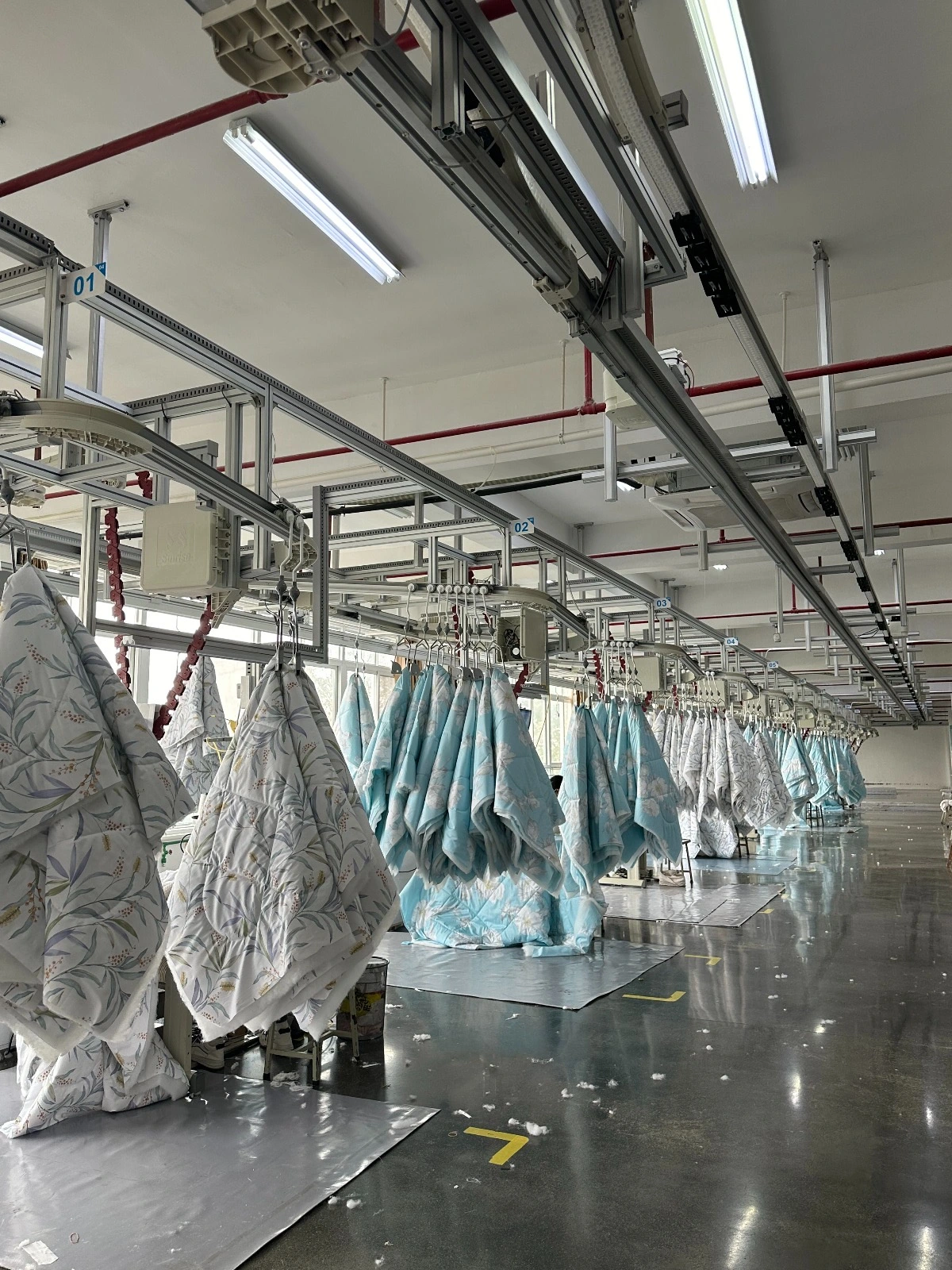
Real vetting looks different. You confirm the factory actually manufactures the product, rather than quietly passing your order to someone else as a trading company. You check that it can hold your quality at your volume, not just on a single sample. And you see the floor, because a polished video call never shows you what the line really looks like at scale. That is why being on the ground matters more than any certificate a supplier emails you.
A few red flags reliably separate an operator from a middleman. Watch for a partner who pushes minimum order quantity before they understand your spec, who cannot or will not audit the factory in person, or who earns a commission from the factory while claiming to represent you. We run it the other way. Our team is on the ground in China with 15+ years there, 800+ verified suppliers behind us, and a verified manufacturer in around 6 weeks, with zero commissions from suppliers, so the factory we put in front of you is chosen for your product, not for our cut. For the full set of questions that expose a reseller on the first call, see our guide to choosing a procurement outsourcing company.
When private label isn’t the right move
To be straight with you, private label is not the answer for everyone.
If your whole edge is the product itself, a novel mechanism, a real formula breakthrough, something you want to protect, then full custom development is the right call, not a labeled version of an existing product. If your volumes are tiny and one off, factory minimums may not pencil out yet, and you are better off proving demand first. And if you need stock on a shelf next week, no manufacturing path moves that fast, private label included.
A partner worth hiring will tell you when one of these is you, instead of selling you a run you should not place. That honesty up front is cheaper than a warehouse of product you cannot move.
Build your private label with operators on the ground
This is the model we run for founders and brands launching their products: 18 brands launched, 800+ verified suppliers, and our own team on the ground in China. We find your manufacturer, lock the sample, manage production with QC at every stage, handle certification and freight, and ship the first batch, while you stay in control the whole way.
Tell us what you want to build, and we will tell you straight what it takes to launch it.
Frequently asked questions
How much does private label manufacturing cost?
It depends on the product, your order volume, and how much you customize, so any single number would just mislead you. Some of the cost is also hidden: if your agent takes a commission from the factory, you usually pay more than a transparent fee would ever cost you. The sharper question is what a bad factory choice would cost you, since that is exactly what the right partner is there to prevent.
What is the minimum order quantity for private label?
Minimum order quantity varies a lot by product category and factory, from a few hundred units to several thousand, and it is rarely fixed in stone. A manufacturer with an existing line, and a partner who actually knows the relationship, can often negotiate a first run that fits a launch instead of forcing you into volumes built for established brands.
Is private label the same as white label?
Not quite. White label is one generic product that many sellers brand as their own, with nothing changed underneath. Private label gives you room to adjust the formula, spec, or packaging so the product is meaningfully yours. The difference matters for your margin and for how much you stand out, and we cover it in full in private label vs white label.